

Every October 24, the world marks World Polio Day to renew its commitment to eradicating a disease that has paralysed and killed children across generations. For Nigeria, the 2026 commemoration, themed “A Chance for Reflection and a Reminder to Reach Every Last Child,” presents an opportunity to celebrate past achievements, examine present challenges and recognise the people working tirelessly to protect millions of children.
One question continues to puzzle many Nigerians: if the country was declared polio-free in 2020, why does polio immunisation remain a regular feature of the National Primary Health Care Development Agency (NPHCDA) schedule?
The answer lies in understanding what that declaration meant. In August 2020, Nigeria was certified free of indigenous wild poliovirus transmission after going three consecutive years without detecting the virus. It was a historic achievement that helped secure the certification of the African Region as free of indigenous wild poliovirus.
However, the certification did not mean that every form of poliovirus had disappeared. Nigeria has continued to battle circulating vaccine-derived poliovirus, particularly type 2, which can emerge and spread in communities where vaccination coverage is inadequate.
Polio vaccination therefore remains necessary, not because the 2020 declaration was false, but because the country must sustain immunity and stop other forms of the virus from circulating.
Polio is a highly infectious disease that primarily affects children under five. It can cause irreversible paralysis and sometimes death. Although there is no cure for paralytic polio, vaccination provides effective protection.
The emergence of circulating vaccine-derived poliovirus is associated with prolonged transmission of weakened vaccine virus in populations where many children are inadequately immunised. As the virus circulates, it can undergo genetic changes and regain the ability to cause disease.
You may also like;
- Nigeria Is Not Yet Ebola-Free: What WHO Has Clarified and What Happens Next
- The Poison Hidden in Freshness: When Healthy Living Becomes a Health Risk
- World Food Day: Eat Right Today, Live Better Tomorrow
- Madonna University, Don’t Destroy These Nursing Students Over One Costly Mistake!
Nigeria’s challenges include poor routine immunisation coverage, insecurity, population displacement, misinformation and difficulties reaching remote communities. These factors leave some children vulnerable even when vaccination campaigns are conducted regularly.
This further explains why the NPHCDA, state governments and their partners continue to organise supplementary immunisation campaigns alongside routine childhood vaccination. The objective is to close immunity gaps, protect vulnerable children and interrupt transmission.
Partners such as the World Health Organization (WHO), the United Nations Children’s Fund (UNICEF), Rotary International, Gavi and the Gates Foundation have contributed through technical assistance, vaccine delivery, funding, surveillance, community mobilisation and public education. Their support has been important, but the success of these interventions depends heavily on the people who deliver vaccines directly to children.
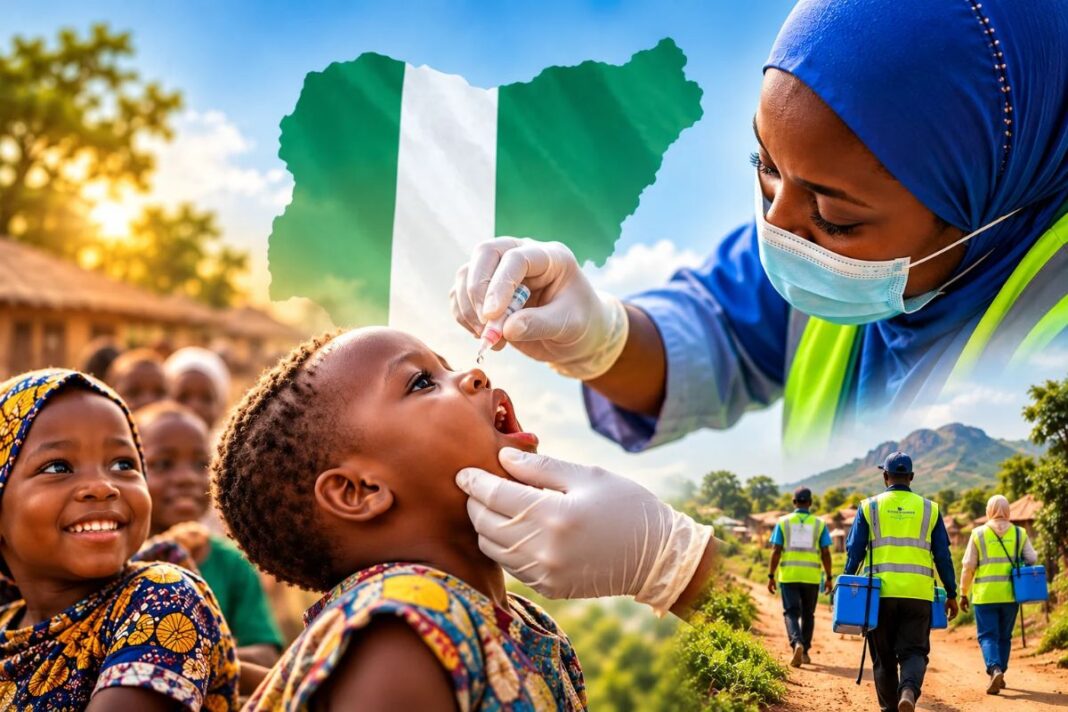
Behind every successful vaccination campaign are thousands of health workers across the 774 local governments in the 36 states and the federal capital territory, who travel through communities, knock on household doors, counsel anxious parents and administer vaccines, sometimes under difficult and dangerous conditions.
These frontline workers are the real faces of Nigeria’s polio eradication campaign. They work in rural settlements, crowded urban neighbourhoods, remote communities and areas affected by insecurity. Some endure long journeys, harsh weather, inadequate transportation and insufficient equipment to ensure that children are not left behind.
They must also confront misinformation, suspicion and resistance from parents who question the safety or necessity of repeated vaccination. Winning such families over requires patience, communication skills and persistence. A health worker may have to return to the same household several times before a caregiver agrees to immunise a child.
In some locations, workers operate in difficult security conditions, placing their personal safety at risk while carrying out an assignment intended to protect the public. Their work goes beyond administering drops or recording vaccination figures. They are helping to prevent lifelong disability, protect families from avoidable suffering and safeguard the future of the country.
Yet, how often do federal and state governments publicly acknowledge these sacrifices? Beyond campaign launch ceremonies, official photographs and statistics announcing the number of children vaccinated, what practical support do these workers receive?
Applause is welcome, but it cannot replace fair remuneration, adequate protective equipment, reliable transportation, timely payment of allowances, proper training and access to essential supplies.
The federal and state governments should ensure that frontline workers are paid promptly and adequately for their services. Their welfare should not become an afterthought once campaign funds have been released or vaccination targets announced. Those working in insecure and hard-to-reach communities deserve appropriate security arrangements, logistical support and recognition of the additional risks they face.
Governments should also invest in the broader primary healthcare workforce, provide opportunities for professional development and establish transparent systems for rewarding outstanding service. Local government authorities must be involved because they are often closest to the communities where vaccination takes place.
Recognising these workers is not merely a gesture of gratitude. It is a practical investment in public health. A motivated, adequately equipped and fairly treated workforce is better positioned to reach missed children, build public trust and sustain vaccination coverage.
The federal government, through the Federal Ministry of Health and Social Welfare and the NPHCDA, must continue to provide leadership, financing, vaccines and effective coordination. State governments must ensure that primary healthcare centres function properly, health workers receive the necessary support and routine immunisation services are accessible.
Regular vaccination campaigns should complement, not substitute for, a strong routine immunisation system. Families should be able to obtain essential childhood vaccines at functional health facilities without unnecessary barriers.
Governments must also strengthen disease surveillance, improve vaccine storage and delivery, and work with traditional rulers, religious leaders and community organisations to counter misinformation. Mobile outreach services should be expanded to reach nomadic populations, displaced families and communities far from established health facilities. Above all, authorities must look beyond the number of doses administered. The more important question is whether children who have repeatedly missed vaccination are finally being reached.
The theme of World Polio Day 2026 is a reminder that national achievements mean little if vulnerable children remain unprotected. Nigeria’s wild-polio-free certification was a major milestone, but the continuing circulation of vaccine-derived poliovirus demonstrates that vigilance cannot end with celebration.
As the country commemorates this year’s World Polio Day, it must celebrate the contributions of international partners while paying greater attention to its own frontline health workers. These men and women are essential to the success of every immunisation programme, yet their contributions can easily disappear behind official statistics.
The federal and state governments must show their appreciation through concrete action: better working conditions, prompt payment, adequate equipment, security, professional support and meaningful recognition.
Nigeria has demonstrated that wild poliovirus can be eliminated. To finish the job, the country must sustain public confidence, strengthen routine immunisation and ensure that no child is overlooked.
The fight against polio will not be won by vaccines alone. It will be won by vaccines delivered by supported health workers, trusted by communities and backed by governments willing to invest in both.