

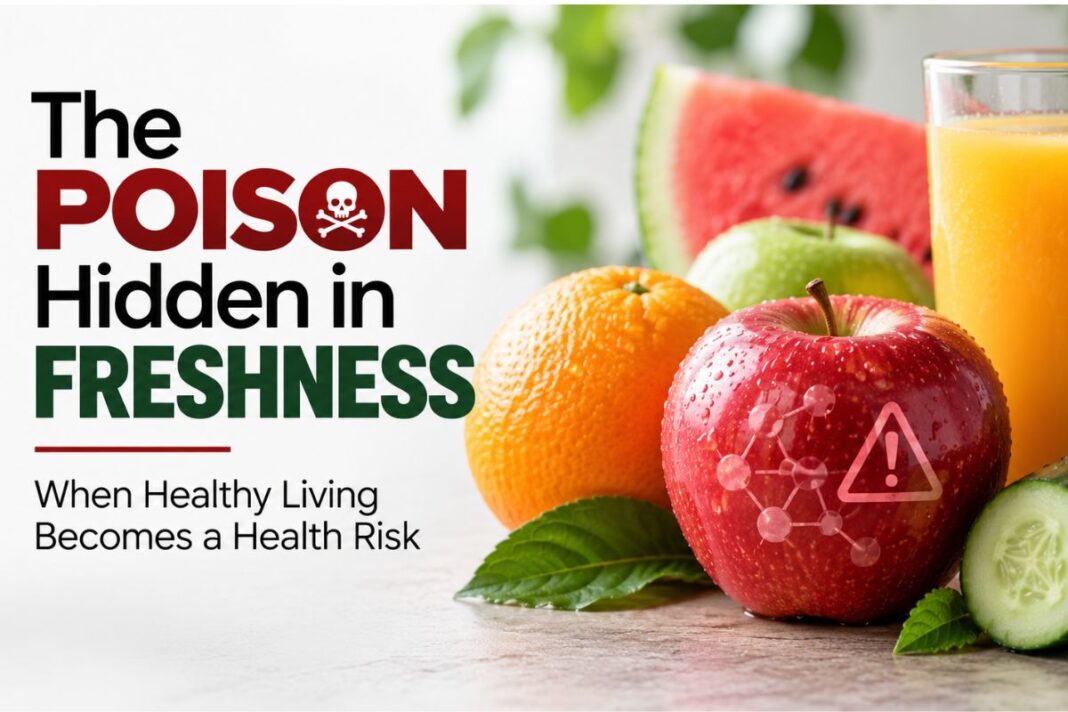

Former Vice President, Professor Yemi Osinbajo recently shared a story that should make every Nigerian pause before reaching for a seemingly fresh fruit on a market shelf.
According to him, his wife, Dolapo, had been suffering persistent headaches despite maintaining what many would consider a healthy lifestyle. Among her daily habits was the regular consumption of fresh fruit juice. Naturally, nobody would suspect that a drink squeezed from colourful fruits could be connected to a health concern. After all, fruits are symbols of wellness. They are the foods doctors recommend and nutritionists celebrate.
Yet, as Osinbajo explained, appearances can be deceptive. A fruit may look fresh, attractive and nutritious while harbouring dangerous chemical residues invisible to the naked eye. The very foods consumed in pursuit of good health may sometimes become vehicles for harmful substances.
His story is not merely a family experience. It is a warning signal for a nation. Across Nigeria, countless consumers walk through markets every day admiring shiny apples, bright oranges, spotless cucumbers and beautifully coloured watermelons. In many cases, freshness has become a marketing strategy rather than a guarantee of safety. Farmers, distributors and traders, under pressure to maximise profits and minimise losses, often resort to excessive pesticide use and chemical preservatives to extend shelf life and improve appearance.
The result is a dangerous illusion. The fruit looks healthy. The danger remains hidden.
Modern agriculture relies on pesticides to protect crops from insects, fungi and weeds. The challenge is not necessarily the use of pesticides themselves but their misuse. The World Health Organisation notes that pesticides can have acute and chronic health effects depending on the amount and duration of exposure and emphasizes the need for strict regulation and monitoring of residues in food.
Unfortunately, regulatory oversight in many developing countries remains weak. Farmers often lack adequate training on approved chemicals, dosage levels and safe waiting periods before harvest. In some cases, crops are sprayed shortly before being taken to market. Traders may also apply chemicals during storage and transportation to keep produce looking attractive for longer.
Consumers see freshness. Chemists see residue.
You may also read;
- When the Pepper Reaches the Pepper Seller’s Eye: The Lessons Nigeria Keeps Refusing to Learn
- FAAC Windfall and the Missing Development Dividend: What Are Nigerian Governors Doing With the Money?
- When the Mob Becomes Judge, Jury and Executioner
- Nepal Floods 2026: Inside the Deadliest Himalayan Disaster in a Generation
Researchers have repeatedly raised concerns about the situation in Nigeria. A study conducted by scientists from the University of Nigeria, Nsukka, detected 38 pesticide residues in sampled fruits and vegetables sold in Nigerian markets. Several residues exceeded internationally accepted maximum limits, and the researchers warned of potential health risks from prolonged consumption.
Another study found pesticide residues above recommended safety limits in a significant proportion of fruit and vegetable samples, leading researchers to call for stronger regulatory monitoring to protect consumers.
These findings should concern every household. The average Nigerian family consumes fruits believing they are making healthy choices. Parents encourage children to eat more fruits. Doctors advise patients recovering from illness to increase fruit intake. Health-conscious individuals spend extra money on smoothies and freshly squeezed juices. Yet many have little knowledge of how these fruits were cultivated, preserved or transported before arriving at their tables.
The irony is painful. People are investing in health but may unknowingly be purchasing risk.
This problem reflects a broader societal challenge. Increasingly, economic pressures are pushing ethics into the background. Farmers want bigger yields. Traders want less spoilage. Middlemen want higher profits. Consumers want cheaper products. Somewhere along this chain, safety becomes secondary.
The consequences may not appear immediately. Unlike food poisoning that strikes within hours, exposure to harmful chemical residues often unfolds gradually. Headaches, fatigue, hormonal disruptions, neurological problems and other health complications may emerge over time. Establishing a direct connection between a health condition and years of consuming contaminated produce can be difficult, making the problem even more dangerous. The WHO warns that pesticide exposure can lead to both short-term and long-term health effects depending on exposure levels.
The tragedy is that many Nigerians are already battling a healthcare system stretched by inadequate infrastructure, rising treatment costs and shortages of medical personnel. Adding preventable chemical exposure to the nation’s health burden is a luxury the country cannot afford.
What makes the issue even more troubling is that the victims are often the most vulnerable members of society.
Children consume large amounts of fruits relative to their body weight. Pregnant women are encouraged to increase fruit intake. Elderly citizens rely on fruits as part of disease-management diets. These groups may be particularly susceptible to the effects of chemical contaminants. Researchers examining pesticide use in Nigeria have specifically highlighted concerns regarding vulnerable populations such as children, pregnant women and the elderly.
This is where government intervention becomes indispensable.
Food safety cannot be left solely to market forces. Regulatory agencies such as the National Agency for Foods Drugs and Administrative Control (NAFDAC) must intensify monitoring of pesticide residues in fruits and vegetables sold across the country. Random sampling should become routine rather than occasional. Laboratories responsible for food testing should receive adequate funding and equipment. Importers, farmers and distributors found violating safety standards should face meaningful sanctions.
The nation already regulates pharmaceuticals because medicines affect public health. Food deserves the same seriousness.
Awareness is equally important. Many farmers simply do not know the long-term implications of improper pesticide application. Extension services should educate them on safer alternatives, correct application methods and compliance with international standards. Consumers should also be taught practical safety measures such as thoroughly washing fruits and vegetables, peeling where appropriate, and purchasing produce from trusted sources. While washing may not eliminate all residues, the WHO acknowledges that washing and peeling can help reduce exposure.
Educational institutions also have a role to play. Agricultural colleges and universities should place greater emphasis on sustainable farming practices. Media organisations should continuously spotlight food safety issues rather than waiting for a major health crisis to emerge.
The private sector must not be excluded. Supermarkets and food retailers should establish stronger quality-control systems. Certification programmes that identify produce meeting safety standards could help consumers make informed choices.
Most importantly, Nigerians must begin asking questions.
Where did this fruit come from?
How was it grown?
What chemicals were used?
What quality checks were performed?
For too long, appearance has been mistaken for safety.
Osinbajo’s story reminds us that danger does not always announce itself with warning labels. Sometimes it arrives disguised as a healthy habit. Sometimes it sits quietly inside a glass of freshly squeezed juice.
A shiny apple is not automatically a safe apple. A colourful orange is not necessarily a healthy orange. A fresh-looking fruit is not always a harmless fruit.
As a society, we must move beyond judging food by appearance alone. Food safety should become a national conversation involving farmers, regulators, researchers, traders and consumers alike.
The goal is not to frighten people away from fruits. On the contrary, fruits remain essential to healthy living. The goal is to ensure that the foods meant to nourish Nigerians do not become silent threats to their wellbeing.
Because in the end, true freshness is not merely about how a fruit looks. It is about whether it is safe enough to eat.