

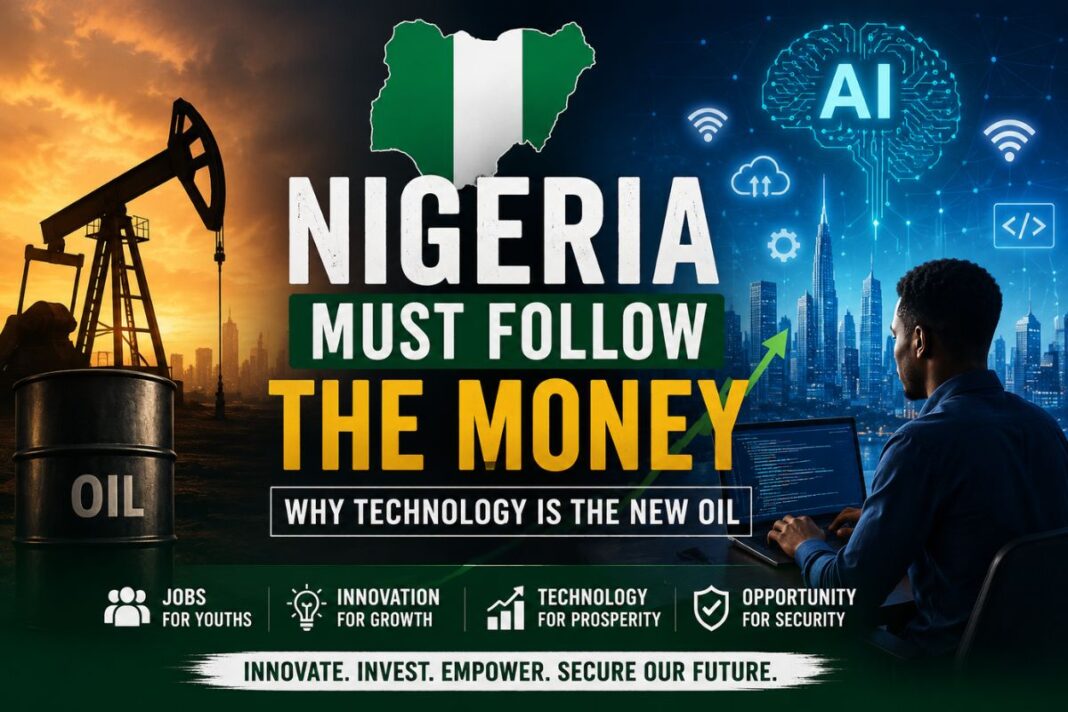

There was a time when the fortunes of Nigerian business moguls rivalled those of many of today’s global technology billionaires. Aliko Dangote was wealthier than many of the technology entrepreneurs who currently dominate the global rich list. Mike Adenuga, Folorunsho Alakija and other Nigerian billionaires commanded enormous wealth from sectors such as petroleum, telecommunications, manufacturing and commodities.
At the time, names such as Mark Zuckerberg and Elon Musk were still emerging in global business circles. Few would have predicted that within two decades, technology entrepreneurs would completely redefine the global wealth landscape.
Today, the story has changed dramatically.
The world’s richest individuals are overwhelmingly technology-driven entrepreneurs. Elon Musk, Mark Zuckerberg, Larry Page, Sergey Brin, Larry Ellison, Jeff Bezos, Jensen Huang and Steve Ballmer dominate the list of the world’s wealthiest people. The common denominator among them is technology. Their fortunes are built not on crude oil, cement, steel or real estate, but on software, artificial intelligence, digital platforms, cloud computing, semiconductors and data-driven innovation.
You may also like;
- FAAC Windfall and the Missing Development Dividend: What Are Nigerian Governors Doing With the Money?
- When the Pepper Reaches the Pepper Seller’s Eye: The Lessons Nigeria Keeps Refusing to Learn
- June 12: Nigeria’s Democratic Journey and the Test of 2027
- The House Is Burning: Why Nigeria Can No Longer Afford to Treat Insecurity as Routine
This transformation reveals an important economic truth: money has changed location.
The greatest wealth creation opportunities of the 21st century are no longer concentrated in traditional industries. They are increasingly concentrated in technology.
And the evidence is overwhelming.
In 2025 alone, Google’s parent company, Alphabet, generated more than $400 billion in revenue. Microsoft generated more than $280 billion in annual revenue during the same period. These revenues exceed the Gross Domestic Product (GDP) of many sovereign nations around the world. In fact, Alphabet’s annual revenue is larger than the economies of dozens of countries, while Microsoft’s revenue rivals the GDP of several African nations combined.
What does this tell us?
For those who have ears to hear, it is clear that the world’s most valuable assets are no longer necessarily buried beneath the ground. They are increasingly found in human creativity, innovation, software, algorithms and technological solutions.
Unfortunately, Nigeria is yet to acknowledge or fully adjust to this reality.
While other nations are aggressively investing in artificial intelligence, robotics, software engineering, digital manufacturing, cybersecurity, semiconductor technology and innovation ecosystems, Nigeria still depends heavily on crude oil exports and traditional economic structures.
The result is visible everywhere.
Millions of young Nigerians leave schools and universities every year without access to meaningful employment opportunities. Frustration grows. Poverty deepens. Insecurity increases. Criminal activities become attractive alternatives for some who see no legitimate pathway to economic prosperity.
Yet, the same young Nigerians have repeatedly demonstrated exceptional talent whenever opportunities emerge.
Nigerians are among the most successful software developers, engineers, data analysts, digital entrepreneurs and technology professionals across the world. From Lagos to London, from Abuja to Silicon Valley, Nigerian youths are proving that they can compete with the best minds globally.
The challenge is not talent. Rather, it is the absence of a deliberate national strategy to convert talent into large-scale economic value.
This is why both government and the private sector must urgently shift their attention toward technology development.
Government must create an enabling environment for technology-driven growth. This includes stable electricity, affordable broadband internet, modern digital infrastructure, technology parks, innovation hubs, favourable tax policies and improved access to startup financing. Coding, artificial intelligence, robotics, data science and digital entrepreneurship should become integral parts of the educational curriculum from primary school through university.
Beyond infrastructure, government must deliberately support the establishment of indigenous technology companies capable of competing globally. The next Google, Microsoft, Nvidia or Oracle can emerge from Nigeria if the right ecosystem is created.
The private sector also has a crucial responsibility.
Major Nigerian corporations should invest aggressively in research and development, technology incubators, venture capital funds and startup accelerators. Banks should create financing products tailored for technology entrepreneurs. Successful business leaders should mentor and fund innovative young Nigerians. Telecommunications companies, financial institutions and manufacturing firms should collaborate with startups to develop solutions that solve local and global problems.
The benefits would be enormous.
A thriving technology ecosystem would generate millions of jobs directly and indirectly. Software developers, product designers, cybersecurity specialists, AI engineers, digital marketers, cloud architects and technology consultants would find opportunities within Nigeria rather than seeking them abroad.
More importantly, technology-driven economic growth would contribute significantly to reducing insecurity.
An employed and empowered youth population is less vulnerable to recruitment into criminal networks, banditry, kidnapping, terrorism and other forms of social unrest. Economic opportunity remains one of the most effective weapons against insecurity.
History has shown that nations that invest in innovation prosper. Those that ignore technological transformation eventually fall behind. Nigeria is currently suffering insecurity over the neglect of out-of-school children which has continued to rise. We cannot afford to close our eyes again.
The world has entered the age of artificial intelligence, automation and digital economies. Wealth is increasingly created by ideas rather than raw materials. The countries that understand this reality will produce the next generation of global corporations and billionaires.
Nigeria stands at a crossroads.
The nation can continue relying primarily on yesterday’s industries, or it can position itself at the centre of tomorrow’s economy.
If Nigeria is serious about tackling unemployment, reducing insecurity, creating sustainable prosperity and competing on the global stage, then government, businesses, educational institutions and communities must make technology a national priority.
The next oil boom may never come.
But the next technological revolution is already here.
The question is whether Nigeria will participate in it or watch from the sidelines while others reap the rewards. The ball is in our court!